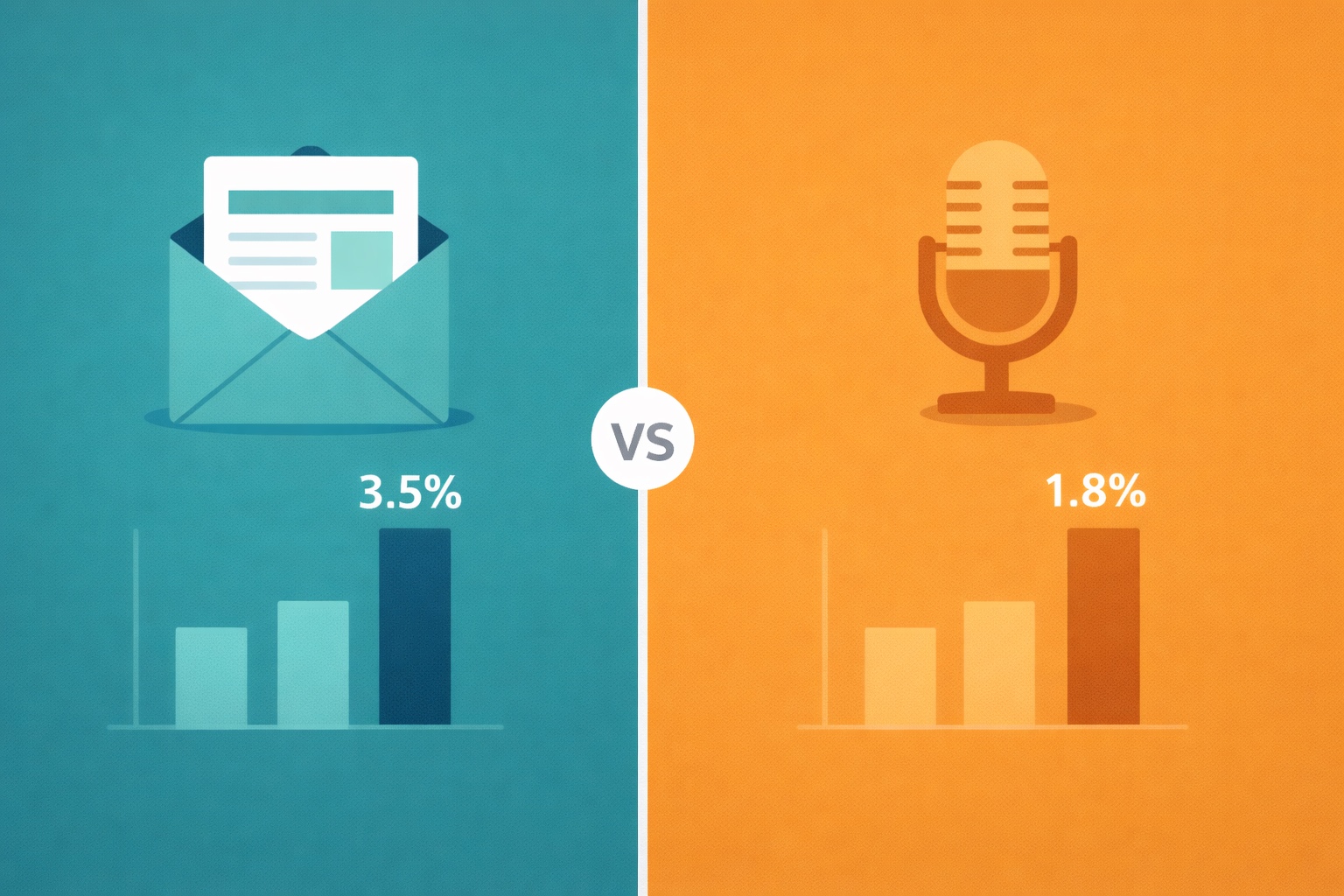
Introduction: Mistakes are predictable and preventable
Newsletter advertising works, but not every advertiser succeeds with it. The difference between campaigns that deliver strong return on ad spend and those that waste budget is not luck or secret knowledge. It is execution discipline. Most advertisers who fail in newsletter advertising make predictable mistakes—targeting too broadly, neglecting creative quality, ignoring attribution, or misunderstanding how the inbox environment differs from display or social channels. These mistakes are preventable. This guide identifies the ten most common errors advertisers make when buying newsletter inventory and explains how to avoid each one.
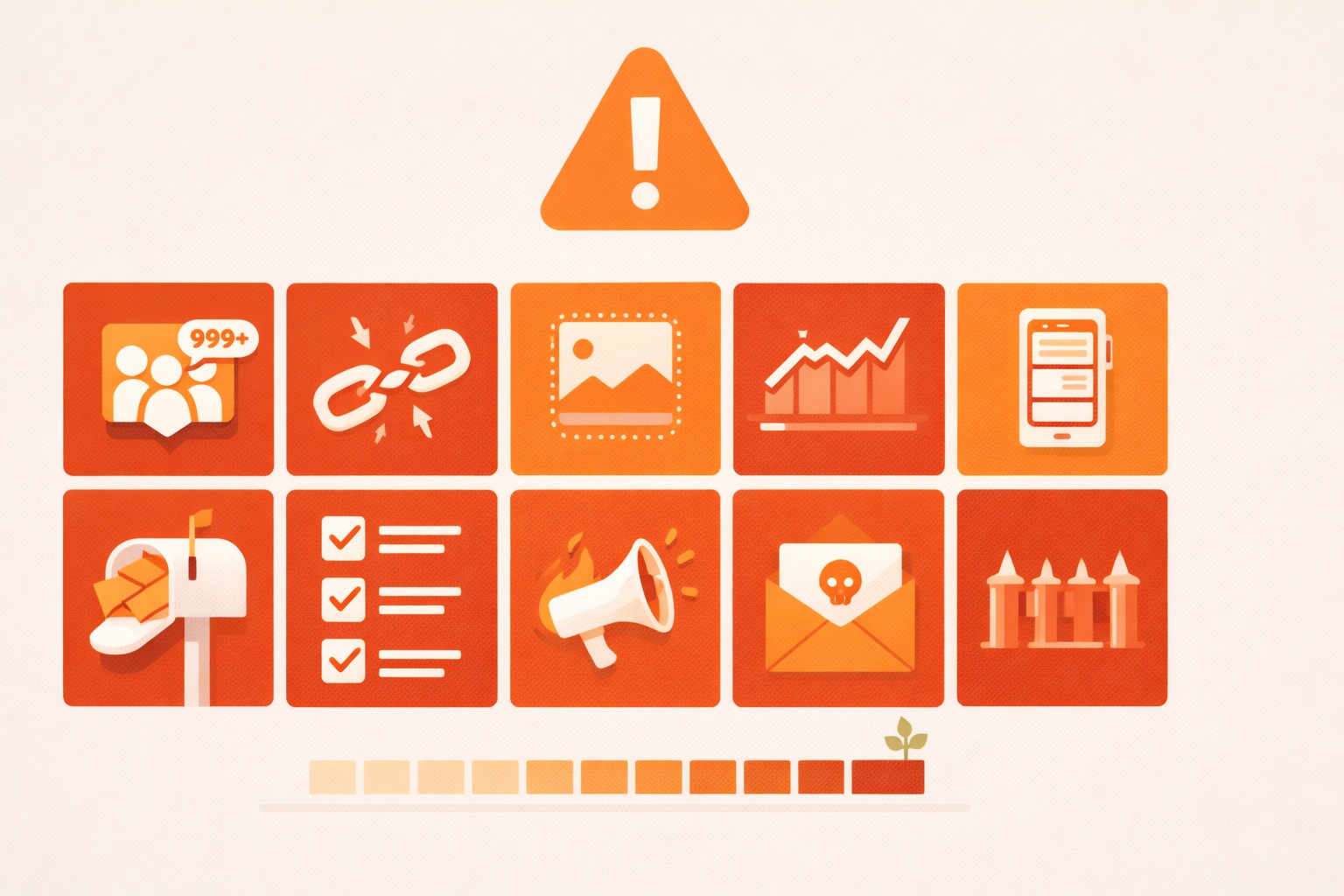
The stakes matter because newsletter advertising represents a significant opportunity for advertisers who get it right. The channel offers high engagement, precise targeting, and attribution capabilities that other channels struggle to match. But it also punishes carelessness. A poorly executed newsletter campaign does not just underperform—it can damage brand perception if the ad appears in the wrong context or if the creative feels mismatched. Learning from these common mistakes allows advertisers to capture the channel's advantages while avoiding the pitfalls that trip up first‑time buyers and even experienced marketers unfamiliar with email's unique dynamics.
Mistake 1: Choosing newsletters based on size alone
The most common mistake is prioritizing subscriber count over engagement quality. A newsletter with 100,000 subscribers sounds more valuable than one with 10,000, but if the larger newsletter has a 15 percent open rate and the smaller one has 50 percent, the smaller newsletter delivers more engaged impressions. Engagement quality determines ad performance, not list size. Advertisers who chase large lists without evaluating open rates, click patterns, and audience demographics waste budget on inventory that looks impressive in media kits but fails to deliver results.
The fix is to request performance data before committing to placements. Ask publishers for average open rates over the last four to eight issues, not just the best‑performing issue. Ask for click‑through rates on previous ads in similar categories. Ask for unsubscribe and complaint rates, which signal list health. A publisher who cannot or will not provide this data is either inexperienced or hiding problems. Transparency is a prerequisite for smart buying decisions.
Size still matters, but only after engagement is confirmed. A highly engaged list of 10,000 is a starting point. Once that placement proves effective, the advertiser can scale to larger newsletters in the same category. This sequencing reduces risk by validating messaging and fit before committing larger budgets.
Mistake 2: Neglecting creative quality and message match
Advertisers often treat newsletter creative as an afterthought, repurposing display banners or social ads without adapting them to the inbox environment. These ads fail because they were designed for different contexts with different attention patterns. Display ads compete in crowded sidebars and assume users will scroll past. Newsletter ads appear within curated content that readers opted into, which means the ad must match the editorial tone and deliver clear value to justify attention. Mismatched creative feels intrusive and generates complaints rather than conversions.
The fix is to create newsletter‑specific creative that respects the medium. Use native text formats when the newsletter's audience values substance over spectacle. Use minimal image banners when visuals add clarity rather than decoration. Ensure the headline addresses a specific problem or opportunity the reader cares about. Keep copy concise—80 to 120 words for text ads, fewer than ten words for banner headlines. Test the creative in preview mode across multiple email clients to confirm it renders correctly and reads clearly on mobile devices.
Message match between the ad and the landing page is equally critical. If the ad promises a free trial, the landing page must open with the trial signup form, not a generic homepage or a sales pitch. Discontinuity kills conversion rates. The best campaigns treat the ad and landing page as a single, coherent experience where every element reduces friction between interest and action.
Mistake 3: Ignoring attribution and tracking setup
Many advertisers launch newsletter campaigns without implementing proper attribution, then struggle to measure results or justify continued spend. Without UTM parameters, conversion pixels, or tracking infrastructure, the advertiser cannot connect ad spend to outcomes. This blindness makes optimization impossible and leaves decision‑makers guessing whether the channel works. The mistake often stems from assuming newsletter advertising is a brand awareness play that does not require performance tracking. That assumption wastes budget.
The fix is to treat attribution as non‑negotiable. Tag every ad link with UTM parameters that identify the newsletter, placement, campaign, and creative variation. Implement conversion tracking on the advertiser's site using pixels or server‑side calls that capture signups, purchases, or other desired actions. Set up dashboards that surface key metrics—impressions, clicks, click‑through rate, conversions, cost per acquisition—at placement and campaign levels. Review these metrics weekly during active campaigns and use the data to inform real‑time optimization decisions.
Proper attribution also enables fair comparison to other channels. When newsletter campaigns are tracked with the same rigor as paid search or social, the advertiser can allocate budget based on performance rather than assumptions. Channels that deliver measurable results earn more budget. Channels that underperform get paused or optimized. Attribution makes this discipline possible.
Mistake 4: Failing to test before scaling
Advertisers sometimes commit large budgets to newsletter campaigns before validating that the channel, the creative, and the targeting work for their business. This approach treats newsletter advertising like a mature channel where best practices are known and execution is predictable. In reality, every advertiser's audience, product, and messaging are unique, and what works for one company may fail for another. Skipping the test phase invites expensive failures that could have been identified and corrected with smaller initial investments.
The fix is to start with test budgets that allow learning without risking material losses. Allocate $1,000 to $3,000 to test three to five newsletters with different audience profiles. Run multiple creative variations to identify which headlines, formats, and calls to action resonate. Track performance closely and establish benchmarks for what constitutes success—click‑through rates, conversion rates, cost per acquisition. Only after these benchmarks are met should the advertiser scale spend. Scaling too early wastes money on unproven placements; scaling too slowly leaves opportunity on the table. The discipline is to scale based on data, not intuition.
Mistake 5: Overlooking audience‑newsletter fit
Not every newsletter with the right topic is the right placement. A software product targeting developers might perform well in a newsletter about programming best practices but poorly in a newsletter about tech industry news, even though both reach developers. The difference is context and intent. Readers of the best‑practices newsletter are in problem‑solving mode and receptive to tool recommendations. Readers of the news newsletter are in consumption mode and less likely to act on product ads. Advertisers who ignore this nuance buy placements that look correct on paper but fail in practice.
The fix is to evaluate newsletters not just by audience demographics but by editorial focus and reader intent. Subscribe to the newsletter and read several issues to understand what mindset readers are in when they engage with the content. Ask whether the ad would feel natural in that environment. If the newsletter is highly opinionated, ensure the brand's positioning aligns with those opinions. If the newsletter is educational and practical, ensure the ad offers actionable value rather than vague promises. Fit is subjective, but it is also critical to performance.
Mistake 6: Running ads in newsletters with inconsistent or poor editorial quality
Advertisers sometimes buy placements based solely on metrics—open rates, list size, cost—without evaluating the quality of the editorial content. A newsletter with strong engagement but weak editorial standards risks damaging the advertiser's brand through association. If the content is clickbait, poorly researched, or inconsistent in tone, readers perceive the newsletter as low‑quality, and that perception transfers to the ads it runs. brand safety is not just about avoiding offensive content; it is about maintaining alignment with environments that reinforce brand values.
The fix is to evaluate editorial quality before committing to placements. Read multiple issues. Assess whether the content is well‑researched, clearly written, and consistent with the newsletter's stated focus. Check whether previous ads feel integrated or out of place. If the newsletter publishes erratically or if quality varies significantly between issues, that inconsistency signals risk. Publishers who maintain high editorial standards attract engaged, loyal audiences and provide safer environments for advertising. Publishers who cut corners erode trust, which undermines ad performance.
Mistake 7: Using overly aggressive or misleading creative
Some advertisers import tactics from display or social advertising without recognizing that the inbox has different norms. Clickbait headlines, exaggerated claims, and fear‑based messaging that might generate clicks in other channels often backfire in newsletters. Readers expect a certain level of respect and transparency in their inbox, and ads that violate those expectations generate complaints, unsubscribes, and poor conversions. Even when aggressive creative drives short‑term clicks, the quality of those clicks is low, and the long‑term damage to brand perception outweighs temporary gains.
The fix is to align creative tone with the newsletter's editorial standards and the audience's expectations. Use clear, honest messaging that makes a specific promise the landing page can fulfill. Avoid superlatives and hyperbole—"Best tool ever" or "Revolutionary solution"—that feel like marketing rather than information. Frame the value proposition in terms of outcomes the reader can verify: "Cut meeting time by 30 minutes per week" or "Deploy in 15 minutes without code." Specificity builds trust; vagueness erodes it.
Mistake 8: Ignoring mobile optimization
Most newsletter opens now happen on mobile devices, yet many advertisers design creative only for desktop and fail to test how it renders on small screens. Text that looks readable on a laptop becomes tiny on a phone. Banners that fit neatly in a desktop layout get cropped or distorted on mobile. Calls to action that are easy to click with a mouse become frustrating tap targets. Poor mobile experiences reduce click‑through rates and conversions, and they frustrate readers who expect mobile‑first design in 2026.
The fix is to design for mobile first and then verify that the creative works on desktop. Use larger fonts—at least 14 pixels for body text, 18 or larger for headlines. Ensure buttons are large enough to tap easily, with enough spacing around them to prevent misclicks. Test creative on actual mobile devices using multiple email clients—Gmail, Apple Mail, Outlook—because rendering varies. If the advertiser cannot test directly, send preview emails to personal accounts and review them on phones before launch. Mobile optimization is not optional; it is table stakes.
Mistake 9: Not setting frequency caps or managing ad fatigue
Advertisers who buy placements across multiple newsletters in the same network or category risk overexposing their ads to readers who subscribe to multiple publications. When the same ad appears repeatedly across a reader's inbox, performance degrades due to creative fatigue. Readers begin to ignore the ad, or worse, they perceive the brand as spammy. This problem compounds when the advertiser runs the same creative for months without refreshing it, even within a single newsletter. Repetition without variation kills engagement.
The fix is to set frequency caps that limit how often any reader can be exposed to the same ad within a given time window. Platforms like InboxBanner allow advertisers to specify caps—for example, no more than two exposures per reader per month. Advertisers should also rotate creative variations to maintain freshness. Even small changes—swapping the headline, testing a different call to action, or updating the visual—can reset engagement and extend the effective life of a campaign.
Mistake 10: Treating newsletter advertising as set‑it‑and‑forget‑it
Many advertisers launch newsletter campaigns and then neglect to monitor or optimize them until the campaign ends. This passive approach assumes that performance will remain stable, but newsletter performance varies based on content mix, seasonality, and audience changes. Campaigns that start strong can degrade over time if creative fatigues, if audience interest shifts, or if the advertiser's offer loses relevance. Ignoring these signals wastes budget on underperforming placements that could have been improved or paused.
The fix is to treat newsletter advertising as an active discipline that requires ongoing attention. Review performance data weekly during active campaigns. Identify placements or creative variations that underperform relative to benchmarks and either optimize or pause them. Test new placements to expand reach and discover better‑performing inventory. Refresh creative quarterly or whenever performance dips. The best advertisers maintain logs of what works, what fails, and why, and they apply those learnings continuously. Optimization is not a one‑time event; it is a practice that compounds returns over time.
How InboxBanner helps advertisers avoid these mistakes
InboxBanner's platform is designed to address many of these mistakes structurally. The platform provides transparency into publisher performance—open rates, engagement patterns, audience demographics—so advertisers can evaluate fit before buying. It enforces attribution through automatic UTM tagging and provides real‑time dashboards that surface clicks, conversions, and cost metrics. Creative preview tools allow advertisers to test how ads render across devices and email clients before launch. Frequency caps prevent overexposure, and programmatic auction dynamics ensure efficient pricing. These features do not eliminate the need for advertiser discipline, but they reduce friction and make best practices easier to execute.
Conclusion: Discipline over shortcuts
The mistakes outlined here are common but not inevitable. Advertisers who approach newsletter advertising with the same rigor they apply to paid search or social—testing before scaling, tracking performance closely, optimizing continuously—will avoid most of these errors. The channel rewards discipline and punishes carelessness. Advertisers who treat newsletters as just another impression to buy will struggle. Advertisers who respect the medium, understand the audience, and execute with care will find that newsletter advertising delivers results other channels cannot match. InboxBanner exists to support that discipline by providing the infrastructure, transparency, and controls that make smart execution practical at scale.