Introduction: Negotiation is not conflict — it is deal architecture
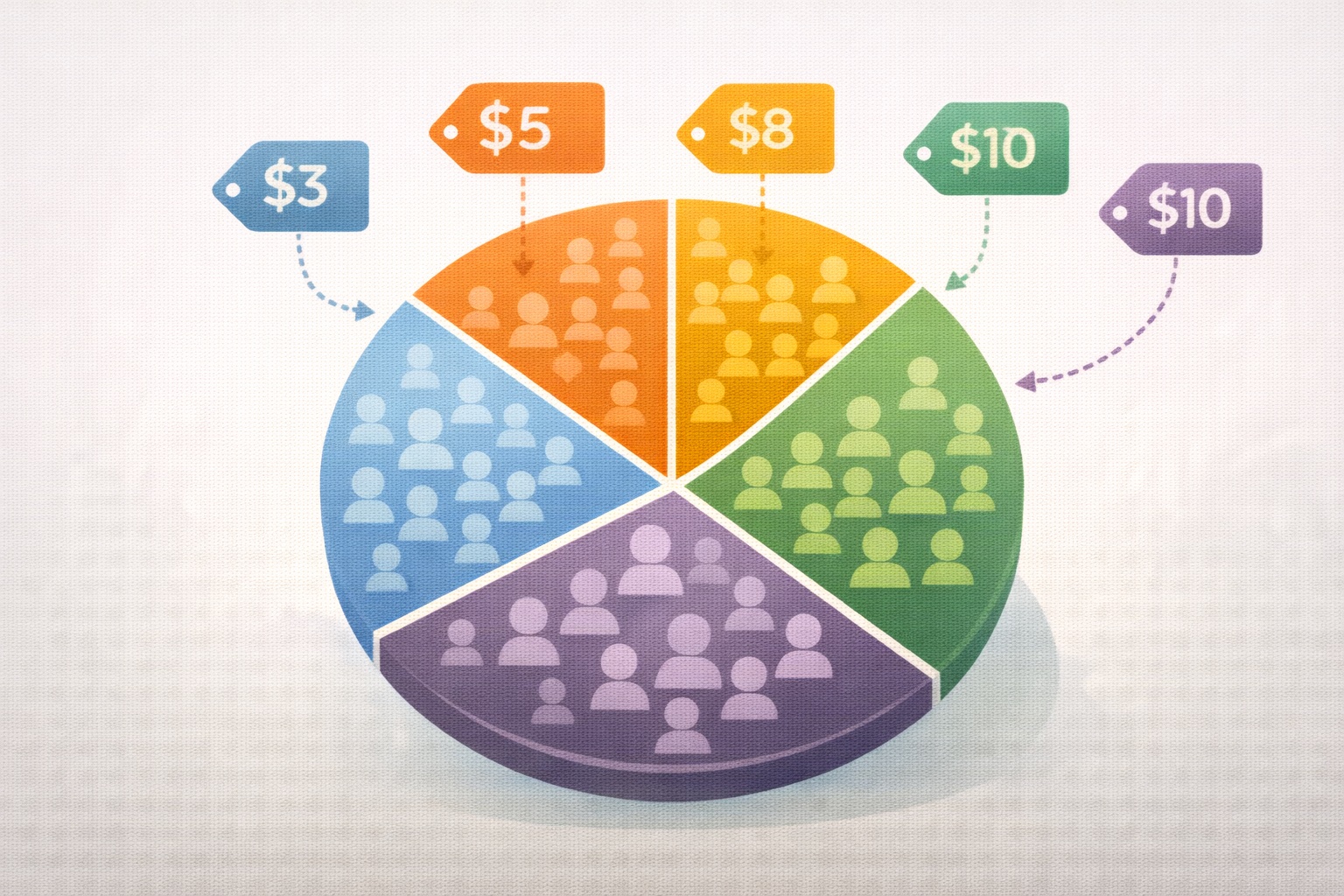
Most newsletter publishers approach sponsorship negotiation with one of two dysfunctional postures. The first is avoidance — setting a rate, presenting it as fixed, and hoping the advertiser accepts without pushback. The second is capitulation — caving at the first sign of resistance, discounting immediately, and treating every objection as a signal that the original price was wrong. Both postures produce worse outcomes than a third approach: treating negotiation as a collaborative process of structuring a deal that works commercially for both parties.

Good negotiation in newsletter sponsorships is not about winning a confrontation with an advertiser. It is about understanding what the advertiser actually needs — their budget constraints, their performance expectations, their internal approval process — and structuring a deal that meets those needs while protecting your rate integrity, your editorial standards, and your long-term commercial position. Publishers who develop this skill close more deals, close them faster, retain advertisers longer, and command higher rates over time than those who treat negotiation as either a formality or a fight.
This guide covers the full negotiation process for newsletter sponsorships: how to prepare before any conversation begins, how to handle the most common objections with specific language, how to structure packages that satisfy advertiser budget constraints without discounting your inventory, when to walk away from a deal, the red flags that identify problem advertisers before the campaign runs, and the post-negotiation practices that turn a single deal into a recurring commercial relationship. Scripts and specific language are included throughout because knowing what to say — not just what principles to apply — is what closes deals in practice.
Preparation: What to know before any negotiation conversation
Negotiation outcomes are determined largely before the conversation begins. Publishers who enter a sponsorship discussion without knowing their own numbers, their walk-away point, and the specific value they are delivering to the advertiser in front of them are negotiating from a position of structural weakness — regardless of how confident they appear. Preparation is the most underinvested phase of the sponsorship sales process — including having a polished media kit ready before any conversation begins. Closing the preparation gap produces faster improvements in negotiation outcomes than any improvement in conversational technique.
Know your rates from first principles before any conversation. Our newsletter CPM pricing formula gives you the exact calculation framework. This means knowing your average unique opens per issue, your rolling 12-issue open rate, your average advertiser CTR from previous campaigns, your category CPM benchmark range, and the specific premium your audience characteristics justify relative to that benchmark. A publisher who knows these numbers can respond to any pricing question or objection with data rather than confidence — and data is far more persuasive than confidence in a B2B commercial conversation.
Research the advertiser before the negotiation. What is their product? Who is their target customer? Are they an early-stage company with limited marketing budget or an established brand with agency representation? Have they advertised in newsletters before — and if so, in which ones? A company that has already spent on newsletter inventory understands the channel and is likely to negotiate on performance expectations and package structure rather than on the fundamental value of the format. A company new to newsletter advertising may need to be educated on how CPM compares to their existing channels before pricing becomes the primary negotiation variable.
Define your walk-away point before the conversation begins. This is the minimum rate below which you will not sell your inventory — not the rate you expect to achieve, but the floor below which accepting the deal costs you more in rate integrity erosion than it gains in short-term revenue. Publishers who have not defined a walk-away point before the conversation often discover it under pressure — which is the worst possible time to make that decision, because the social pressure of a live negotiation pushes the floor lower than the publisher's actual interests justify.
Understand the advertiser's likely approval process. Founder-led businesses typically make buying decisions fast — in the same conversation or within 24 hours. Marketing teams at larger companies often require internal approval cycles that can span one to three weeks. Agencies working on behalf of brands may have quarterly budget windows and procurement requirements that affect when a deal can close. Knowing the approval process timeline helps you structure follow-up appropriately and prevents you from misreading a slow response as a lost deal when it is actually a normal approval cycle.
Setting the frame: How the first conversation shapes the entire negotiation
The opening of a sponsorship conversation sets anchors — price reference points and value expectations — that shape every subsequent exchange. Publishers who open with a weak anchor, an apologetic tone, or immediate flexibility on price train the advertiser to expect concessions throughout the conversation. Publishers who open with a confident, data-backed presentation of their inventory value establish an anchor that makes subsequent advertiser pushback feel like it is moving away from a reasonable starting point rather than correcting an opening overreach.
The opening frame should accomplish four things: establish the audience value clearly, present the performance data that supports your pricing, state your rates confidently without qualification or apology, and invite the advertiser to share their objectives so you can determine whether the fit is genuine. A script for this opening might sound like: "Our newsletter reaches 8,200 unique openers per issue — marketing professionals at B2B companies, 73 percent of whom are decision-makers or direct influencers in software buying. Our average advertiser CTR across the last twelve campaigns was 2.6 percent. Our premium top placement runs at $420 per issue. I'd love to understand your campaign objective so we can discuss whether that's the right product for what you're trying to achieve."
Notice what this opening does not include: any indication that the rate is flexible, any comparison to a lower rate you have offered in the past, any apology for the price or suggestion that you know it might be high. The rate is presented as a fact, not a proposal. The invitation to discuss fit shifts the conversation toward a collaborative evaluation rather than an adversarial negotiation about price. This frame — confident rate, clear data, collaborative intent — produces better negotiation outcomes than any specific tactic in the subsequent conversation.
Handling the price objection: Scripts for the most common pushback
The most common objection in newsletter sponsorship negotiation is "that's more than we were expecting to spend" or some variation of "can you do better on the rate?" This objection is not necessarily genuine resistance — it is often a reflexive negotiating move that tests whether you will discount without pressure. How you respond in the first ten seconds of this objection determines the commercial dynamic of the entire relationship.
The wrong response is to immediately offer a discount. Discounting at the first sign of price resistance teaches the advertiser two things: your stated rate was not your real rate, and future resistance will produce future discounts. Both lessons make every subsequent negotiation with that advertiser harder than it needs to be. The right response is to acknowledge the constraint and redirect to value before discussing any structural accommodation. A script that works: "I understand — let me make sure the value is clear before we talk about structure. At 8,200 unique openers and a 2.6 percent average CTR, this placement typically delivers 210 to 250 clicks per issue to relevant offers. At $420, that's roughly $1.70 to $2.00 per click to a highly qualified audience — how does that compare to what you're paying in your current channels?" This response reframes the conversation from "is this too expensive?" to "is this good value?" — which is a fundamentally different question.
If the advertiser acknowledges the value but genuinely cannot meet your rate, the correct accommodation is not a discount on the premium placement — it is an alternative structure. Offer a secondary placement at a lower absolute rate. Offer a shorter run of issues at the full rate as a trial. Offer programmatic inventory at a lower CPM with less targeting precision. What you should never offer is the same inventory at a reduced rate, because that decision will define every future interaction with that advertiser. A script for offering alternatives: "I can't move on the top placement rate because it reflects the actual delivery cost of that position. What I can do is offer you our mid-content placement at $260 per issue — same audience, slightly lower visibility, but the same delivery quality. Would that work within your budget?"
When an advertiser asks for a discount with no stated reason — just a generic "can you do better?" — the most powerful response is a simple question: "What are you working with on budget?" This question does three things: it moves the conversation from your flexibility to their constraint, it reveals whether the gap is real or tactical, and it gives you the information needed to offer a genuinely helpful alternative if the gap is real. Many advertisers who ask "can you do better?" are operating with a budget that is within 15 to 20 percent of your stated rate — close enough to close with a multi-issue package that slightly reduces the per-issue cost without touching your single-issue rate.
The multi-issue package: Your most powerful negotiation tool
The multi-issue package is the single most effective tool in a newsletter publisher's negotiation arsenal because it simultaneously solves the advertiser's budget concern, increases the publisher's total revenue from the relationship, reduces re-selling overhead, and provides the campaign duration that newsletter advertising actually needs to deliver measurable results. When an advertiser objects to a single-issue rate, the correct move is almost always to offer a multi-issue package rather than a discount.
The commercial logic works like this: an advertiser who commits to four issues at five percent off pays less per issue than the single-issue rate, which satisfies their budget concern. But the publisher receives four times the revenue from a single sales conversation, guaranteed, rather than having to re-sell the placement after each issue. The reduced re-selling cost more than compensates for the per-issue discount, making the multi-issue package a genuine win for both parties rather than a concession by the publisher.
Structure your packages deliberately. A three-tier package menu — single issue at full rate, four-issue package at five percent off, eight-issue package at ten percent off — gives advertisers clear options at different commitment levels without requiring you to construct a custom deal for every conversation. Present these packages proactively in your media kit so that advertisers encounter the multi-issue structure before the negotiation begins, framing it as a standard option rather than a concession you are making under pressure.
When an advertiser is hesitating between a single issue and a multi-issue commitment, a closing script that works: "The four-issue package gives you enough runway to see how your offer performs across different issue topics and different segments of our audience. Most advertisers who test with one issue and see good results wish they had booked four from the start — both because they get more data and because the rate is locked in before we review pricing. If you're confident the audience is a fit, the four-issue structure protects your budget while giving the campaign time to work." This script addresses the advertiser's uncertainty directly while making the case for commitment without pressure.
Negotiating performance expectations — setting the right benchmarks
Many sponsorship negotiations founder not on price but on performance expectations. An advertiser who expects a 5 percent CTR in a category that averages 2 percent will feel disappointed by a campaign that objectively performed well. An advertiser who expects 500 clicks from a newsletter that delivers 200 qualified opens per sponsor will calculate their budget entirely incorrectly. Aligning performance expectations during negotiation is as important as aligning on price — and misalignment here is a more common cause of non-renewal than any pricing dispute.
Establish performance benchmarks proactively, before the advertiser states their own expectations. Present your average CTR from previous campaigns, the range of outcomes across campaign categories, and the factors that drive performance within that range. A script for this benchmark-setting conversation: "Our average advertiser CTR across the last twelve campaigns is 2.6 percent, with a range of 1.8 to 3.9 percent depending on offer type, creative quality, and category match. SaaS trial offers with a strong free tier tend to see higher CTR. Webinar registrations see moderate CTR. E-commerce offers with discount codes see variable performance depending on product-audience fit. Where does your offer fall in that landscape?"
This question invites the advertiser to self-assess their offer's attractiveness to your audience, which produces more honest performance expectations than any number you provide. An advertiser who tells you their offer is a complex enterprise product requiring a demo request is telling you — and acknowledging to themselves — that their CTR expectations should be at the lower end of your range, not the upper end. A publisher who sets this expectation framing during negotiation will almost never face a disappointed advertiser post-campaign, because the outcome will be within the range they acknowledged during the conversation.
Decline to offer performance guarantees for first-time placements. Guaranteeing a minimum CTR or click volume creates liability that the publisher cannot fully control — the advertiser's landing page quality, their offer attractiveness, and seasonal factors all affect conversion in ways the publisher cannot influence. Instead of guarantees, offer transparency: "I can't guarantee a specific CTR, but I'll share the full performance data — opens, clicks, and placement-specific CTR — within 24 hours of the send, and if the campaign significantly underperforms the category benchmark we've discussed, I'll work with you on a make-good. That's a better protection than a guarantee because it's based on actual outcomes rather than projections."
Negotiating exclusivity, content approval, and editorial controls
Sponsorship negotiations are not only about price and performance. Advertisers frequently request conditions that affect your editorial operation: exclusivity within a category, the right to approve the content surrounding their ad, restrictions on which other advertisers can appear in the same issue, or the ability to review and approve your newsletter content before it sends. Each of these requests has a legitimate version and an overreaching version, and knowing how to respond to each is essential to protecting your editorial independence while maintaining the commercial relationship.
Category exclusivity — a request that no competing advertiser appears in the same issue — is a reasonable and common request that deserves a premium rather than a refusal. If an advertiser is a CRM tool, their request that no other CRM appear in the same issue is commercially logical and easy to honor. Price this exclusivity explicitly: "Category exclusivity is available at a 20 percent premium on top of the placement rate. That ensures your product is the only solution in your category that our readers see in that issue." This framing turns the request into a revenue opportunity rather than a constraint.
Full-issue exclusivity — a single advertiser owning all commercial positions in an issue — is a premium product worth pricing at a meaningful uplift above the sum of your individual placement rates. Some advertisers want this for brand consistency; others want it to prevent their message from being diluted by competitive or adjacent advertising. Offer full-issue exclusivity at 30 to 40 percent above the combined rate for all individual placements. The premium reflects the opportunity cost of not filling those positions with other advertisers and the incremental value the advertiser receives from undivided commercial space.
Requests to review your editorial content before the issue sends are a different matter entirely. An advertiser who wants to ensure their ad does not appear adjacent to content that conflicts with their brand values is making a brand safety request — reasonable, manageable, and worth accommodating with a defined process. An advertiser who wants to influence or approve your editorial content as a condition of advertising is requesting something that would compromise your editorial independence and the trust your readers have in your publication. Decline the latter firmly and without apology: "Our editorial content is not subject to advertiser review or approval — that's the basis of the trust our readers have in us, which is ultimately what makes your placement valuable. I'm happy to ensure your ad does not appear adjacent to specific topic categories, but I'm not able to share editorial content for approval before it sends."
Red flags: Advertiser behaviors that predict problems before the campaign runs
Not every advertiser who wants to book a placement is an advertiser you should accept. Some advertiser behaviors during the negotiation phase reliably predict problems during campaign execution — late creative, payment disputes, excessive demands, or misuse of your audience in ways that damage your editorial reputation. Recognizing these red flags during negotiation allows you to decline problematic bookings before the operational cost of those problems is incurred.
The first red flag is persistent pressure for performance guarantees. An advertiser who will not accept a placement without a guaranteed minimum click volume or CTR is shifting the risk of their campaign entirely onto the publisher. This risk transfer is inappropriate because click performance depends significantly on factors the publisher does not control — the advertiser's offer quality, their landing page, and the relevance of their product to the audience. Advertisers who insist on guarantees after a clear explanation of why they are not offered are either inexperienced with the channel or are deliberately structuring the deal to enable disputes and chargebacks. Decline the booking.
The second red flag is payment resistance on the first deal. A first-time advertiser who pushes back on upfront payment, requests net-30 terms on an initial booking, or asks for the campaign to run before the invoice is paid is signaling a willingness to receive your audience's attention without certainty of payment. Legitimate advertisers who are serious about the channel accept standard payment terms without resistance. Payment friction on the first booking almost always continues through subsequent bookings and sometimes escalates into disputed invoices after campaigns have run. Require upfront payment on first bookings without exception and treat resistance to this term as a disqualifying signal.
The third red flag is an offer or product that you would not feel comfortable recommending to your subscribers in editorial context. An ad for a product with misleading claims, aggressive upsell practices, or a reputation for poor customer service will generate reader complaints and unsubscribes that outlast the campaign revenue. Your newsletter's credibility is a long-term asset that every placement decision either protects or erodes. Review the advertiser's product, website, and customer reviews before accepting a booking, and decline placements that would compromise the editorial trust your readers have placed in your publication.
The fourth red flag is a demand to dictate the content surrounding their placement. An advertiser who wants their ad placed adjacent to a specific type of content — content about their product category, a favourable mention of their brand — is requesting editorial influence through commercial pressure. This request is different from brand safety restrictions, which are appropriate, because it seeks a positive editorial environment engineered for the advertiser rather than simply avoiding negative adjacency. Decline placement-adjacent content requests and be explicit about why: editorial content is driven by reader value, not advertiser preference, and maintaining that boundary is what keeps your publication's value proposition intact for every future advertiser.
The fifth red flag is excessive creative revision cycles before the campaign begins. An advertiser who submits three rounds of creative before an issue sends, requires multiple calls to align on placement specifications, and misses your submission deadline by three days is demonstrating an operational profile that will create significant production overhead across every subsequent issue. This pattern is worth pricing into a future repeat booking — a complexity premium for advertisers who require elevated operational support — or worth declining if the advertiser is unwilling to meet your standard process requirements.
Negotiating renewals: How to raise rates without losing the advertiser
Renewal negotiation is structurally different from first-time booking negotiation because you are now working with a shared performance history rather than projected expectations. An advertiser who has run one or more campaigns with you has data on what they received, and that data — if it is good — is your strongest negotiating asset. An advertiser who has seen 2.8 percent CTR and 180 qualified clicks per issue knows precisely what they are buying. They are not negotiating against your pitch — they are evaluating whether the price of a repeat commitment is justified by the outcome they have already measured.
Use the performance data from the previous campaign as the opening frame for every renewal conversation. Lead with the results, not the rate. A script for a renewal conversation that also introduces a rate increase: "Before we discuss the next run, I wanted to share the results from your previous placement. You received 2.8 percent CTR across four issues, an average of 182 clicks per issue, and we consistently delivered above our stated open rate for all four sends. Based on those results and our audience growth since your last booking — we've added 1,100 subscribers and our open rate has moved from 41 to 46 percent — I've updated our rates for the next quarter. The top placement is now $460 per issue, up from $420. I wanted to give you first access before we open the slots to new inquiries."
This script accomplishes several things simultaneously. It leads with evidence before mentioning price. It frames the rate increase as a consequence of improved performance and audience growth rather than arbitrary inflation. It creates urgency by referencing other potential advertisers. And it offers the existing advertiser first-mover advantage — a form of loyalty recognition that makes the rate increase feel fair rather than opportunistic. Advertisers who experienced good results and feel treated with transparency and respect will accept rate increases at a significantly higher rate than those who encounter a higher price without context or acknowledgment of the previous relationship.
For advertisers who push back on a renewal rate increase, the multi-issue package remains the most effective accommodation. "I understand — if you commit to the next eight issues now, I can hold the rate at $420 for the full run before the new pricing takes effect. That locks in your cost and gives us continuity." This accommodation is genuinely valuable to the advertiser and genuinely valuable to you — eight confirmed issues at the old rate is worth more than four confirmed issues at the new rate, because the volume commitment reduces re-selling overhead and provides revenue predictability.
Walking away: When the right deal is no deal
Not every negotiation should end in a booking. There are situations where accepting a deal at the negotiated terms costs more than declining it — in rate integrity, in editorial credibility, in operational overhead, or in the opportunity cost of inventory that could serve a better-fit advertiser. Knowing when to walk away is as important as knowing how to close, and publishers who have not internalized this knowledge consistently make deals that they later regret.
The clearest situation to decline is when the advertiser's final offer falls below your walk-away rate — the minimum you defined before the conversation began. This is precisely why defining that floor in advance matters: the decision to decline is made before the social pressure of a live negotiation can distort it. A script for a clean decline: "I appreciate the conversation and your interest in the newsletter. Based on where we've landed on rate, I'm not able to make this work commercially at that level — our inventory economics require a floor that I've already discounted from. If your budget opens up in a future quarter or if you'd like to revisit at the rates I've outlined, I'd be genuinely happy to discuss it then. I'll keep your information and reach out if we have an opportunity that might work better for your budget."
This decline is not a door-slam — it is a professional close that preserves the relationship for a future conversation when the advertiser's budget may be different. Publishers who decline deals with clarity and respect frequently hear back from those advertisers in subsequent quarters when budget has been refreshed or when the advertiser has seen enough evidence of newsletter advertising's effectiveness to justify a higher investment. The decline that protects your rate today may produce a full-rate booking in three months.
Also walk away from deals where the editorial or reputational risk is too high regardless of the rate. An advertiser offering to pay above your standard rate for a placement that would compromise your readers' trust is not a good deal at any price. The subscribers who unsubscribe after a brand-inconsistent placement do not come back. The readers who lose confidence in your editorial independence after a single compromised issue take months to rebuild. The CPM you receive from one poorly-vetted placement is always less than the CPM you lose from the audience erosion it causes.
Post-negotiation practices that turn a single deal into a long-term relationship
The negotiation does not end when the deal is signed. What happens in the 72 hours after an advertiser commits to a booking — and in the 48 hours after the campaign runs — determines whether that booking was the beginning of a recurring commercial relationship or a one-time transaction. Publishers who invest in the post-negotiation relationship convert first-time buyers into multi-year partners at rates that far exceed the industry average.
Send a confirmation email within one hour of a verbal or written agreement. The confirmation should restate the terms agreed — issue date or dates, placement position, rate, payment schedule, creative deadline, and any specific conditions negotiated — so there is a written record that both parties can reference if questions arise. This speed and clarity signals operational professionalism from the first moment of the commercial relationship and reduces the risk of the deal falling apart due to miscommunication in the days between agreement and payment.
After the campaign runs, share a performance report within 24 hours of the send. The report should include the metrics promised during negotiation — opens, CTR, total clicks, open rate for that issue — plus a brief personal observation about the campaign. The observation transforms a data document into a relationship touchpoint: "The CTR on your placement came in at 3.1 percent, which is above our campaign average and reflects strong alignment between your trial offer and the segment of our audience that's been most active in clicking tool reviews recently. I'll be curious to hear how the traffic converted on your end."
This closing line — "I'll be curious to hear" — opens the door for the advertiser to share their downstream conversion data, which gives you the performance story you need for your media kit case study and the information needed to structure a more effective second campaign. It also maintains the conversation past the transaction, which is the foundation of a commercial relationship rather than a completed sale. Publishers who ask about downstream results and genuinely engage with the answer create advertiser partnerships rather than vendor relationships, and partnerships renew at significantly higher rates than vendor engagements.
Conclusion: Negotiation skill compounds with every deal
Newsletter sponsorship negotiation is a skill that improves with deliberate practice in ways that most other publishing skills do not. Each conversation teaches you something about what objections are most common in your advertiser category, which responses resolve those objections most efficiently, which deal structures produce the highest renewal rates, and which red flags predict the deals that will cost you more to service than they generate in revenue. The publisher who approaches every negotiation as a learning opportunity accumulates a negotiation intelligence that makes each subsequent conversation easier and more productive than the last.
The scripts and frameworks in this guide are starting points, not scripts to be read verbatim. Effective negotiation requires adapting language to the specific person in front of you — their communication style, their level of sophistication with newsletter advertising, their budget reality, and the specific commercial problem they are trying to solve. The underlying principles — lead with data, hold your floor, offer structure not discounts, set expectations before they are set for you, and invest in the relationship beyond the transaction — apply consistently regardless of how the specific conversation unfolds.
The newsletter publishers who build the most durable ad revenue programs are not necessarily the most aggressive negotiators. They are the ones who have built enough confidence in the value of what they are selling — grounded in real performance data, genuine audience quality, and consistent editorial standards — that negotiation feels less like a confrontation and more like a conversation about how to structure a deal that works for both parties. That confidence is earned through the preparation, the testing, the tracking, and the execution described throughout this guide. Build it deliberately, and the negotiation outcomes will follow.