Introduction: Beehiiv's built-in monetization versus a dedicated ad platform
Beehiiv has built one of the fastest-growing newsletter platforms in the industry by offering creators an all-in-one publishing solution: subscriber management, email delivery, website hosting, growth tools, and a built-in monetization layer — all under one roof. For many newsletter publishers, the appeal of keeping everything in a single platform is genuine. The question is whether Beehiiv's native monetization features are the best way to earn advertising revenue from a newsletter audience, or whether pairing Beehiiv's publishing infrastructure with a dedicated ad monetization platform like InboxBanner produces meaningfully better financial outcomes.
This comparison is not about switching away from Beehiiv as a publishing platform. If you are also evaluating Paved, our InboxBanner vs Paved comparison covers that side-by-side directly. Beehiiv's email delivery, subscriber management, and editorial tools are well-regarded and widely used. The question is specifically about the monetization layer — the mechanism by which newsletter publishers convert their audience's attention into advertising revenue. Beehiiv offers one approach. InboxBanner, which is fully compatible with Beehiiv through a native HTML block integration, offers another. For publishers serious about maximizing their ad revenue, understanding the difference between these two approaches in precise, quantified terms is the most important decision in their monetization strategy.
This guide examines both approaches across every dimension that affects publisher earnings: how each model generates revenue, what the cost structure looks like, how much control publishers retain over their ad environment, what the operational overhead of each approach requires, and how each scales as a newsletter grows from a few thousand to tens of thousands of subscribers. Real earnings scenarios are included throughout to make the comparison concrete rather than theoretical.
How Beehiiv's native monetization works
Beehiiv offers publishers two primary native monetization mechanisms: the Beehiiv Ad Network and paid subscriptions through Beehiiv's premium tier infrastructure. This comparison focuses on the advertising channel — the Ad Network — since paid subscriptions are a different revenue model that operates independently of ad monetization and is not directly comparable to what InboxBanner provides.
The Beehiiv Ad Network is a curated marketplace of brand advertisers that Beehiiv has sourced and manages on behalf of its publisher community. Publishers who opt into the Ad Network make their newsletter inventory available to Beehiiv's advertiser pool. When an advertiser selects a publisher's newsletter for a campaign, the ad appears in the publisher's issue as a native sponsored content block. Beehiiv handles the advertiser relationship, creative delivery, campaign scheduling, and payment processing. Publishers receive a portion of the ad revenue — typically reported at 50 percent of the gross campaign value, with Beehiiv retaining the other 50 percent as its platform fee.
The Ad Network model has real strengths for publishers who are new to monetization and want a fully managed entry point that requires no sales effort, no direct advertiser relationships, and no technical setup beyond enabling the feature in the Beehiiv dashboard. Beehiiv vets the advertisers on the network, handles payment collection, and distributes earnings automatically. For a publisher who has never sold an ad placement before, the frictionlessness of the Beehiiv Ad Network is genuinely valuable.
The limitations of the Beehiiv Ad Network become significant as publishers scale and as they begin to understand the earnings gap between what the network generates and what the inventory is actually worth. First, the 50 percent revenue share means publishers receive half of what advertisers pay for their audience — a substantial portion of earnings that remains in Beehiiv's hands regardless of the publisher's audience size, engagement quality, or operational sophistication. Second, publisher control over which ads appear is limited; Beehiiv curates the advertiser pool, but publishers cannot apply granular blocklists, set category exclusions, or approve individual creatives before they run. Third, fill rate — the percentage of issues that actually receive an Ad Network placement — depends entirely on Beehiiv's demand pipeline, which varies by niche, list size, and timing. Issues that are not filled by the network generate zero Ad Network revenue.
How InboxBanner works with Beehiiv
InboxBanner integrates with Beehiiv through a native HTML block that publishers add to their newsletter template once — a five-minute process that requires no coding knowledge and no changes to Beehiiv's underlying infrastructure. Once the HTML block containing InboxBanner's dynamic ad tag is placed in the template, it serves ads automatically on every open without any issue-by-issue intervention from the publisher. The Beehiiv publishing workflow remains entirely unchanged — publishers continue writing, editing, and sending through Beehiiv as before, with InboxBanner handling the ad serving layer independently.
The ad serving mechanism operates at open time rather than send time. When a subscriber opens a Beehiiv-delivered issue, the InboxBanner tag fires and an auction runs in real time among eligible advertisers whose targeting parameters match the subscriber and newsletter context. The winning ad renders in the subscriber's inbox. This open-time auction means that the CPM for each impression reflects current market demand rather than a rate locked in at booking time — and it means that every open generates a programmatic impression regardless of whether the publisher has an active direct sponsor for that issue.
Publishers who also have their own direct sponsor relationships — brands they have sold to directly, at their own negotiated rates — can enter those campaigns into InboxBanner's dashboard. The platform serves direct campaigns with priority over programmatic demand, ensuring that the publisher's highest-value commercial relationships are always honored first. Unsold inventory after direct campaigns are served is filled automatically by programmatic demand at the publisher's configured floor price. This dual-channel model is the core of what makes InboxBanner structurally different from Beehiiv's Ad Network — it generates revenue on every impression rather than only on the impressions that Beehiiv's demand pipeline fills. For a detailed breakdown of how direct and programmatic channels compare, see our guide on newsletter sponsorships vs programmatic ads.
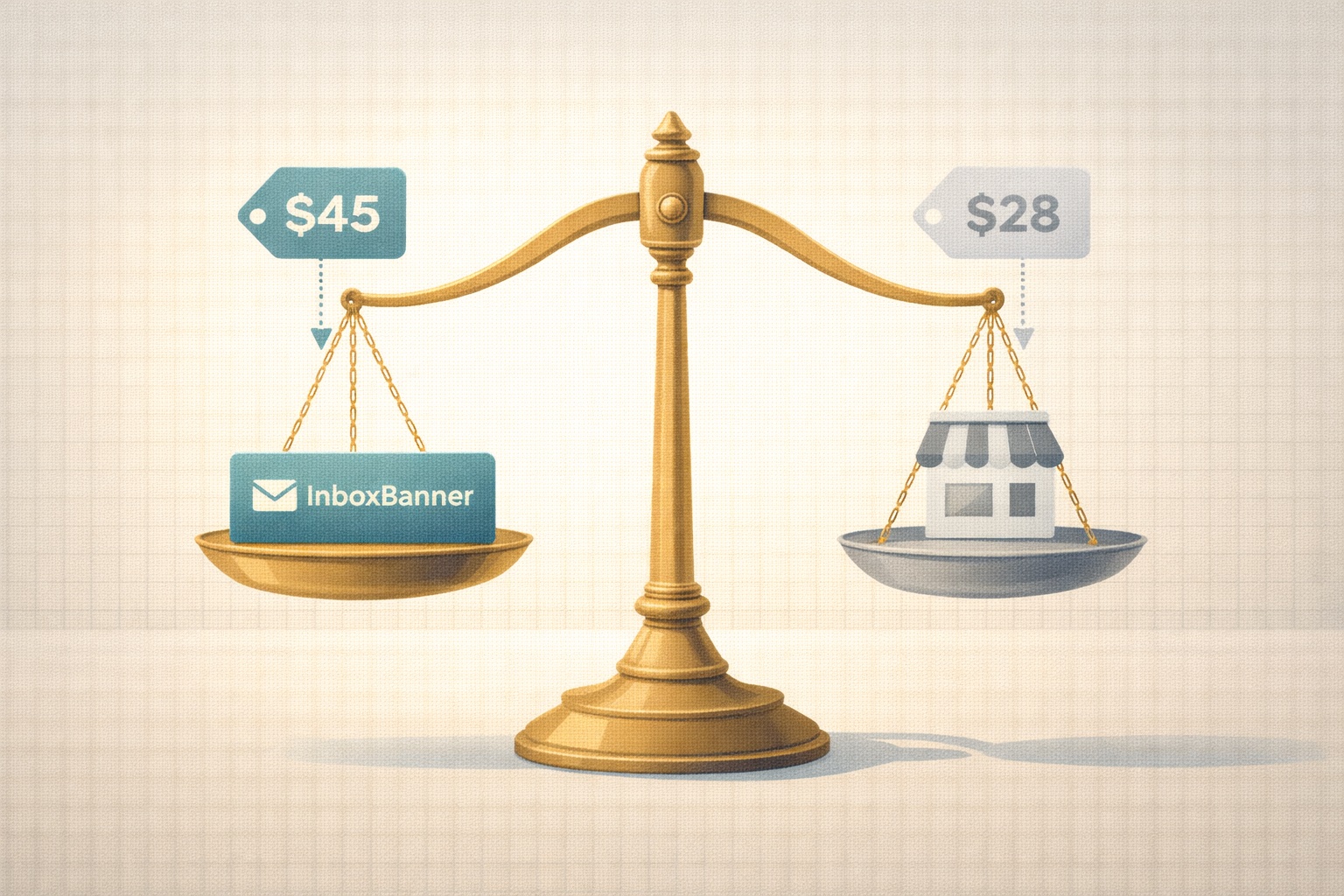
InboxBanner's pricing for Beehiiv publishers is a flat platform fee of $15 per month plus a usage-based component tied to impression volume. This fee structure is not commission-based — publishers do not pay a percentage of their advertising revenue to InboxBanner on direct deals they have sourced themselves. The platform cost is predictable, does not scale with revenue, and decreases as a percentage of total earnings as the newsletter grows and generates more impressions per issue.
Revenue share comparison: The earnings gap is larger than it appears
The headline difference between Beehiiv's Ad Network and InboxBanner is the revenue share structure. Beehiiv retains 50 percent of Ad Network revenue. InboxBanner charges a flat fee plus a usage-based component that, for most newsletter sizes, represents a significantly smaller percentage of total advertising revenue than a 50 percent commission. Understanding the practical earnings implications of this difference requires working through specific scenarios at different audience sizes.
Consider a newsletter with 8,000 subscribers, a 42 percent average open rate, and weekly sends — 3,360 average opens per issue, 52 issues per year, approximately 174,720 annual impressions. If Beehiiv's Ad Network fills 60 percent of issues at an average CPM of $30, the gross annual Ad Network revenue is approximately $3,144 — of which the publisher receives 50 percent, or $1,572. The remaining $1,572 flows to Beehiiv. The 40 percent of issues not filled by the network generate zero Ad Network revenue.
The same newsletter using InboxBanner generates programmatic revenue on every issue — not just the 60 percent that Beehiiv's demand pipeline fills. At a conservative programmatic CPM of $22 across all 174,720 annual impressions, gross programmatic revenue is approximately $3,844. After InboxBanner's platform fee — $180 per year for the base subscription plus a usage component that for this impression volume represents a modest percentage — the publisher retains the substantial majority of that revenue. Even at a conservative retention of 75 percent of gross programmatic revenue, the publisher earns approximately $2,883 — nearly double the $1,572 earned through Beehiiv's 50 percent share on partial fill.
This scenario does not account for the direct sponsor revenue that InboxBanner enables without a revenue share component. If the same publisher has two direct sponsors per month at $300 per placement — a modest direct sponsorship program for an 8,000-subscriber newsletter with a 42 percent open rate — they generate an additional $7,200 per year in direct revenue. On Beehiiv, if those direct deals are managed outside the Ad Network and inserted manually using HTML blocks, there is no Beehiiv commission — but there is significant production overhead. On InboxBanner, those direct deals are managed through the platform's campaign scheduling system without commission and without manual insertion work before each send. The platform automates delivery and tracks performance — saving 10 or more hours per month that the publisher would otherwise spend on manual creative management.
Fill rate mechanics: Why InboxBanner closes the revenue gap that Beehiiv leaves open
Fill rate — the percentage of ad slots that actually receive a paying impression — is the most consequential variable in newsletter ad revenue that most publishers underestimate. A newsletter that sends 52 issues per year and achieves a 60 percent fill rate through a marketplace-dependent model is generating zero advertising revenue on 21 of those issues. That is 21 issues where the publisher's editorial work, production effort, and audience's time produced no commercial return from the advertising layer.
Beehiiv's Ad Network fill rate depends on the demand pipeline that Beehiiv has built with its advertiser community. Publishers in categories with strong brand advertiser interest — entrepreneurship, personal finance, B2B software — tend to see higher fill rates because Beehiiv's demand pool contains more advertisers competing for those audience categories. Publishers in specialized niches — technical professional topics, academic subjects, hyperlocal markets — may see significantly lower fill rates because the Beehiiv Ad Network's demand pool has not been built out for those categories. A publisher in a specialized niche who sees 30 to 40 percent fill through the Beehiiv Ad Network is earning advertising revenue on fewer than half their issues regardless of their audience quality or engagement rate.
InboxBanner's programmatic model closes this gap by generating revenue on every open rather than on the opens that a curated demand pipeline has filled. The real-time bidding auction that runs on every open accesses a broader programmatic demand pool than any single platform's curated marketplace — meaning that even niche newsletters with specialized audiences find relevant advertisers bidding on their impressions because the programmatic ecosystem includes demand across a far wider range of advertiser categories than a single platform's manually curated network. A publisher who moved from 60 percent Ad Network fill to 100 percent programmatic fill on the same impression volume effectively increases their monetized impressions by 67 percent from the same audience and the same send cadence.
The revenue impact of closing the fill rate gap is substantial even at CPMs lower than what direct sponsorships command. An additional 21 issues per year, each generating $50 to $150 in programmatic revenue at 3,360 opens per issue, represents $1,050 to $3,150 in incremental annual revenue — money that Beehiiv's partial fill model leaves on the table entirely. For publishers who view their newsletter as a serious commercial asset, that gap is not a minor efficiency difference — it is a meaningful portion of annual revenue that a platform choice is determining.
Publisher controls: Editorial protection and advertiser management
Editorial control over advertising is not a luxury preference for newsletter publishers — it is the mechanism by which they protect the subscriber trust that makes their inventory valuable in the first place. An ad for a product that conflicts with a newsletter's editorial values, makes misleading claims, or targets subscribers in a way the publisher would not have endorsed damages reader trust in ways that persist long after the campaign has ended. The platform that gives publishers the most granular, proactive control over what appears in their newsletter is the platform that best protects the asset underlying all advertising revenue.
Beehiiv's Ad Network provides publisher controls at a category and opt-in level. Publishers can choose to participate or not participate in the Ad Network, and Beehiiv curates the advertiser pool at a platform level — meaning publishers benefit from Beehiiv's vetting without having to review individual advertisers themselves. The limitation of this approach is that publisher control is essentially binary: participate in the curated network or do not. There are no granular blocklists for specific advertiser categories, no whitelisting of specific preferred advertisers for priority treatment, and no creative approval workflow that allows publishers to review ad content before it reaches subscribers. Publishers who have specific editorial values, who operate in sensitive categories, or who have made explicit commitments to their subscribers about the types of advertising they will and will not accept cannot enforce those commitments within the Beehiiv Ad Network model.
InboxBanner provides proactive, structural publisher controls that operate continuously without issue-by-issue review. Category blocklists allow publishers to permanently exclude entire advertiser verticals — competitor products, sensitive categories, brands whose values conflict with the newsletter's editorial positioning — before any impression is served. Specific advertisers can be whitelisted for guaranteed placement or blacklisted for permanent exclusion. Creative approval workflows allow publishers to review and approve ad creative before it goes live. Price floors by placement position ensure that no impression is served below a minimum CPM the publisher has determined reflects their audience's value. These controls are not reactive — they do not require the publisher to catch a problematic ad after it has already reached subscribers. They are structural filters that prevent problematic ads from ever reaching the auction for the publisher's inventory.
For Beehiiv publishers who have made specific commitments to their audiences about advertising standards — which is common among newsletters in health, finance, legal, and professional development categories — InboxBanner's control granularity is not a nice-to-have feature. It is the difference between being able to honor those commitments operationally and hoping that Beehiiv's platform-level curation is sufficient to prevent exceptions.
Operational overhead: Manual work versus automated ad serving
The time a publisher spends managing advertising operations is time not spent on editorial work, audience growth, or direct sponsor relationships. Minimizing per-issue ad management overhead without sacrificing revenue or control is a genuine operational priority for every publisher running a newsletter as a serious commercial product. The two approaches differ significantly in how much time they require per issue and per month.
Managing direct sponsors on Beehiiv without InboxBanner requires the publisher to manually update the newsletter template before each send. When a direct sponsor changes — a new campaign begins, a running campaign ends, a different creative needs to appear for a specific issue — the publisher must open the template editor, locate the sponsor HTML block, replace the content with the new creative, test that it renders correctly across email clients, and save the updated template before scheduling the send. For publishers with multiple sponsors rotating across issues on different schedules, this process repeats for every rotation change. Publishers managing this process manually consistently report spending 30 to 60 minutes per issue on sponsor-related template work — time that compounds to eight to fifteen hours per month across a weekly newsletter.
InboxBanner eliminates this per-issue template work entirely. Once the HTML block is placed in the Beehiiv template — a one-time setup that takes approximately five minutes — the publisher never touches the template again for ad management purposes. New direct sponsor campaigns are entered into InboxBanner's dashboard — a ten-minute process that involves uploading the creative, setting the campaign dates and priority, and configuring any targeting parameters — and the platform serves the campaign automatically on the correct issues without further intervention. Rotation between multiple sponsors happens automatically according to the priority and scheduling rules the publisher has configured. A publisher with three direct sponsors on rotating schedules spends approximately thirty minutes per month on campaign management in InboxBanner rather than the eight to fifteen hours they would spend on manual template updates.
Fifty Beehiiv publishers who switched to InboxBanner for sponsor management reported saving an average of ten or more hours per month — time they redirected to writing, outreach, and audience development. At a conservative valuation of the publisher's time at $50 per hour, that represents $500 per month in recovered time value in addition to the direct revenue improvements from programmatic fill and reduced platform commission costs.
Direct sponsor management: Where the earnings gap becomes most pronounced
The most significant earnings difference between Beehiiv's native tools and InboxBanner emerges not in programmatic revenue — where InboxBanner's fill rate advantage is meaningful but bounded — but in direct sponsor management. Publishers who have built direct advertiser relationships — brands they pitch, negotiate with, and sell to at their own rates — generate their highest ad revenue per impression through these relationships. How those relationships are managed operationally determines whether the publisher captures the full value of what they have negotiated.
Managing direct sponsors through Beehiiv's native tools requires one of two approaches. The first is manual HTML insertion before each send — effective but time-intensive, as described above. The second is directing direct sponsors through Beehiiv's Ad Network workflow — which means accepting Beehiiv's 50 percent revenue share on deals the publisher sourced through their own outreach, negotiation, and relationship. A publisher who closes a $500 direct sponsor deal and routes it through Beehiiv's Ad Network pays $250 to Beehiiv for the payment processing and campaign management infrastructure — even though the value of that deal was created entirely by the publisher's commercial effort, not Beehiiv's demand generation.
InboxBanner's direct sponsor management does not apply a revenue share to deals the publisher sources themselves. A $500 direct sponsor deal managed through InboxBanner generates the publisher $500 minus the platform's flat monthly fee — not $250 minus the platform's fee. The platform earns its revenue from the programmatic demand it generates for unsold inventory, not from commissions on the publisher's own commercial relationships. This alignment of commercial incentives — InboxBanner earns more by generating more programmatic value for publishers rather than by taking a cut of value publishers generate themselves — is the structural principle that makes InboxBanner's cost model more favorable to publishers as their direct sponsor program grows.
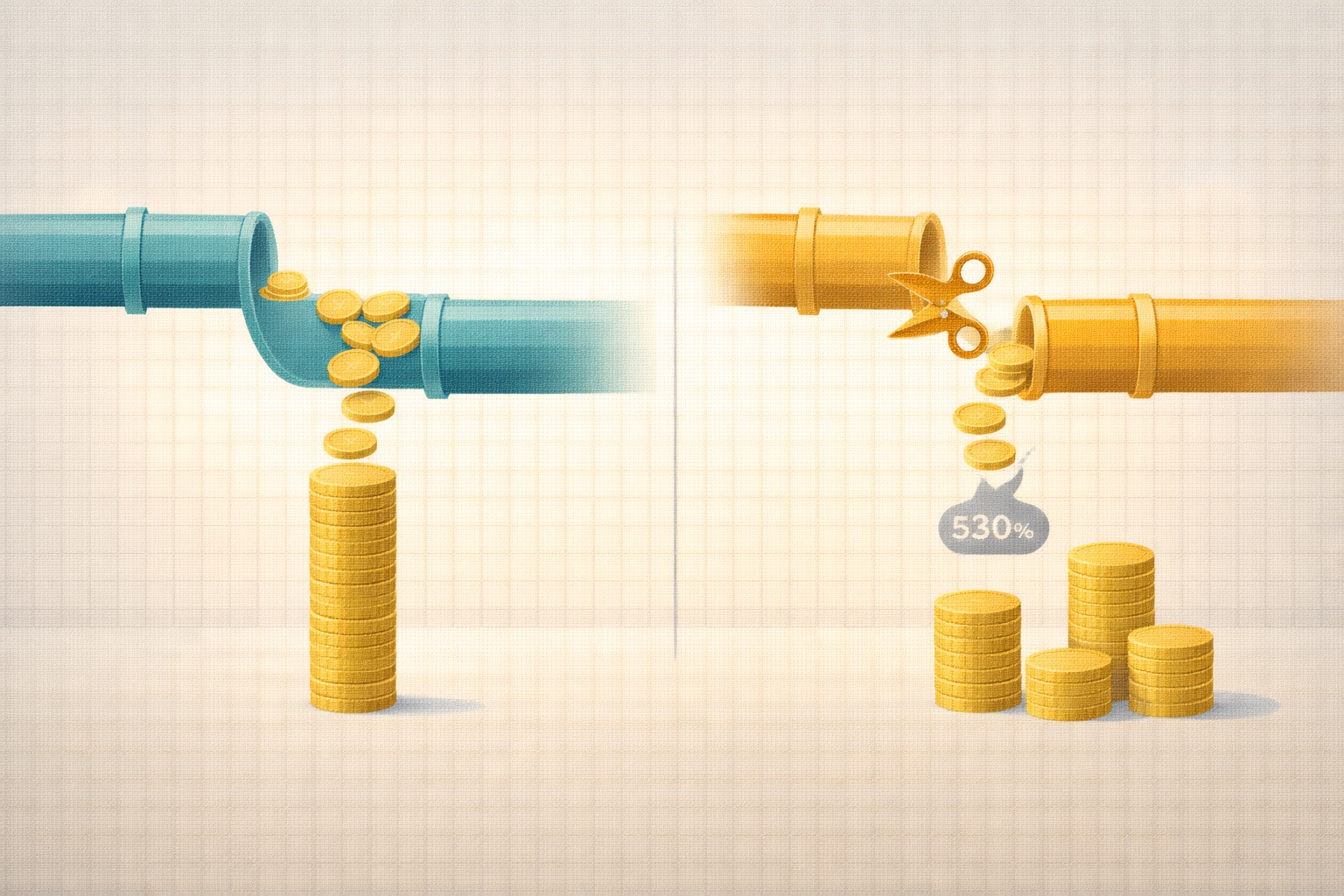
For a publisher with $1,500 per month in direct sponsor revenue, the difference between Beehiiv's 50 percent share and InboxBanner's flat fee model is approximately $750 per month — $9,000 per year — in revenue that stays with the publisher rather than the platform. At $3,000 per month in direct revenue, the difference is $1,500 per month — $18,000 per year. These are not marginal optimization gains. They are material income differences driven entirely by the platform's commission structure.
Performance reporting: What data each approach gives publishers
Revenue optimization requires data. A publisher who can see which placements are generating which CPMs, which advertiser categories are converting best in their newsletter, and how performance varies across issues can make informed decisions about pricing, inventory structure, and direct outreach targeting. A publisher who receives only aggregate campaign reports after the fact is operating without the intelligence needed to optimize the revenue their audience generates.
Beehiiv's Ad Network reporting provides campaign-level metrics — the open rate, click count, and CTR for each sponsored placement that ran through the network. This data is useful for sharing with advertisers in renewal conversations and for understanding whether a specific campaign performed above or below expectations. It does not provide insight into programmatic demand dynamics — what CPMs the market would pay for the publisher's unsold inventory, how performance varies across placement positions, or how different advertiser categories perform against the publisher's audience. Publishers cannot use Beehiiv's Ad Network data to set programmatic floors, optimize placement pricing, or build the case study content that makes direct sponsor pitches more compelling.
InboxBanner's reporting dashboard provides performance visibility across both direct and programmatic channels in real time. Publishers see CPM trends by placement position, fill rates by inventory type, click-through rates by advertiser category, revenue by issue and by campaign, and the comparative performance of direct versus programmatic demand. This breadth of data serves multiple commercial functions simultaneously. Real-time CPM data informs direct sponsor rate-setting — a publisher who can see that their programmatic CPM has increased from $18 to $28 over six months has the market data needed to justify a corresponding increase in direct sponsor rates. Category performance data guides outreach targeting — a publisher who can see that SaaS tool advertisers generate a 3.1 percent CTR in their newsletter while e-commerce advertisers generate 1.4 percent has a compelling argument for prioritizing SaaS advertiser outreach. Performance data accumulated across campaigns builds the case study library that makes media kit pitches more persuasive.
Scaling comparison: How each approach performs as the newsletter grows
The right monetization approach at 3,000 subscribers may not be the right approach at 30,000. Understanding how each model scales — how costs, controls, fill rates, and earnings potential change as audience size and direct sponsor program complexity increase — is essential to making a platform choice that serves the newsletter's commercial trajectory rather than just its current state.
Beehiiv's Ad Network scales in a specific way: as a newsletter grows larger and more recognizable, it becomes more attractive to the brand advertisers on Beehiiv's network, which typically improves fill rates and may improve the CPMs that Beehiiv negotiates on the publisher's behalf. The 50 percent revenue share, however, does not decrease as the newsletter grows. A publisher with 50,000 subscribers earning $10,000 per month through the Ad Network still sends $5,000 to Beehiiv — the same revenue share percentage as when the newsletter had 5,000 subscribers earning $500 per month. The platform's take rate is constant regardless of how much value the publisher is generating.
InboxBanner scales differently. The flat monthly platform fee becomes a smaller percentage of total revenue as the newsletter grows. The usage-based component scales with impressions but not with revenue — meaning that a publisher generating higher CPMs through a growing direct sponsor program pays the same usage cost per impression regardless of the revenue that impression generates. As the publisher's direct sponsor program grows, the effective cost of InboxBanner as a percentage of total ad revenue decreases. At 3,000 subscribers, the platform fee might represent 5 percent of total monthly ad revenue. At 30,000 subscribers with an active direct sponsor program, it may represent less than 1 percent. The platform's cost structure gets more favorable, not less, as the publisher grows.
The operational scaling difference is also significant. A publisher managing three direct sponsors manually through Beehiiv's template system spends 8 to 15 hours per month on ad management. A publisher managing ten direct sponsors manually spends proportionally more — potentially 25 to 35 hours per month on template updates, creative swaps, and scheduling coordination. InboxBanner's automated serving means that managing ten sponsors takes approximately the same 30 to 60 minutes per month as managing three — because the platform handles all delivery automation regardless of how many concurrent campaigns are active. The operational overhead of scaling a direct sponsor program on InboxBanner is flat; on manual Beehiiv management, it grows linearly with the number of sponsors.
When Beehiiv's native monetization is the right starting point
Despite the structural earnings advantages of InboxBanner for most publisher scenarios, there are specific situations where starting with Beehiiv's native Ad Network is a reasonable initial choice — and acknowledging those situations is more useful than arguing that InboxBanner is superior for every publisher at every stage.
Beehiiv's Ad Network is the right starting point for publishers who have fewer than 2,000 subscribers, are not yet focused on advertising revenue as a primary income stream, and want to understand what ad placements look like in their newsletter without any technical setup or operational investment. At very small audience sizes, the absolute revenue difference between the two approaches is modest, and the simplicity of Beehiiv's integrated Ad Network provides a low-friction entry point into newsletter advertising that has genuine value for publishers in early exploration mode.
Beehiiv's Ad Network also makes sense as a temporary complement for publishers who are growing rapidly and want passive inbound advertiser discovery while they build their own direct outreach program. In this scenario, the Beehiiv Ad Network fills some slots with brand advertisers while the publisher develops the direct relationships that will eventually replace or supplement the network — at which point migrating the direct relationship management to InboxBanner recovers the commission cost while retaining the editorial workflow that Beehiiv provides.
The practical migration: Adding InboxBanner to an existing Beehiiv newsletter
The most important operational point in this comparison is that choosing InboxBanner over Beehiiv's native Ad Network does not require choosing between platforms. InboxBanner runs on top of Beehiiv — a Beehiiv publisher who adds InboxBanner keeps their entire Beehiiv workflow intact and adds a programmatic revenue layer and direct sponsor management automation on top of it. The migration is additive, not disruptive.
The setup process has five steps, each requiring approximately two to five minutes: create an InboxBanner account, copy the unique embed code from the InboxBanner dashboard, open the Beehiiv template editor, add an HTML block at the desired ad placement position, and paste the embed code into that block. After saving the template, the integration is complete. The next issue that sends will begin serving programmatic ads on every open. Direct sponsors can be entered into the InboxBanner dashboard at any point and will be served with priority over programmatic demand from the moment they are configured.
Publishers who make this addition report that the Beehiiv editorial experience is unchanged — writing, editing, scheduling, and sending all happen exactly as before. The only visible change is that the ad placement in the template now serves dynamically on open rather than displaying a static sponsor block that requires manual updates before each send. For publishers who have been spending hours per month on manual sponsor management, the operational relief of this change is often described as the most immediately impactful benefit — before the revenue improvements from programmatic fill and commission recovery have had time to accumulate.
Conclusion: Beehiiv for publishing, InboxBanner for monetizing
Beehiiv is an excellent newsletter publishing platform. Its email delivery, subscriber management, growth tools, and editorial interface are legitimate strengths that have attracted a large and growing publisher community. The question this comparison has examined is not whether Beehiiv is a good platform — it is whether Beehiiv's native Ad Network is the best monetization layer for publishers who want to maximize the advertising revenue their audience generates.
The evidence from this comparison consistently points in one direction. A 50 percent revenue share on all Ad Network revenue is a substantial permanent cost that does not decrease as the publisher grows. Partial fill that leaves up to 40 percent of issues without any Ad Network revenue is a gap that InboxBanner's programmatic model closes completely. Binary editorial controls that cannot enforce specific category exclusions or creative approvals are insufficient for publishers with explicit audience commitments. Manual template management that consumes 8 to 15 hours per month per publisher is an operational cost that compounds as the direct sponsor program grows. Each of these limitations is structural — they are consequences of Beehiiv's integrated model, not bugs that a future update will fix.
InboxBanner does not require publishers to leave Beehiiv. It requires them to add a fifteen-minute integration that immediately begins generating programmatic revenue on every open, eliminates per-issue template work, removes platform commission from their own direct deals, and provides the reporting data that makes every future sponsor conversation, rate negotiation, and inventory decision more informed. For publishers serious about advertising revenue, this combination — Beehiiv for publishing, InboxBanner for monetizing — is not a compromise between two competing options. It is a deliberate architecture that takes the best of what both tools offer and leaves none of the revenue on the table that a single-platform approach consistently does.